
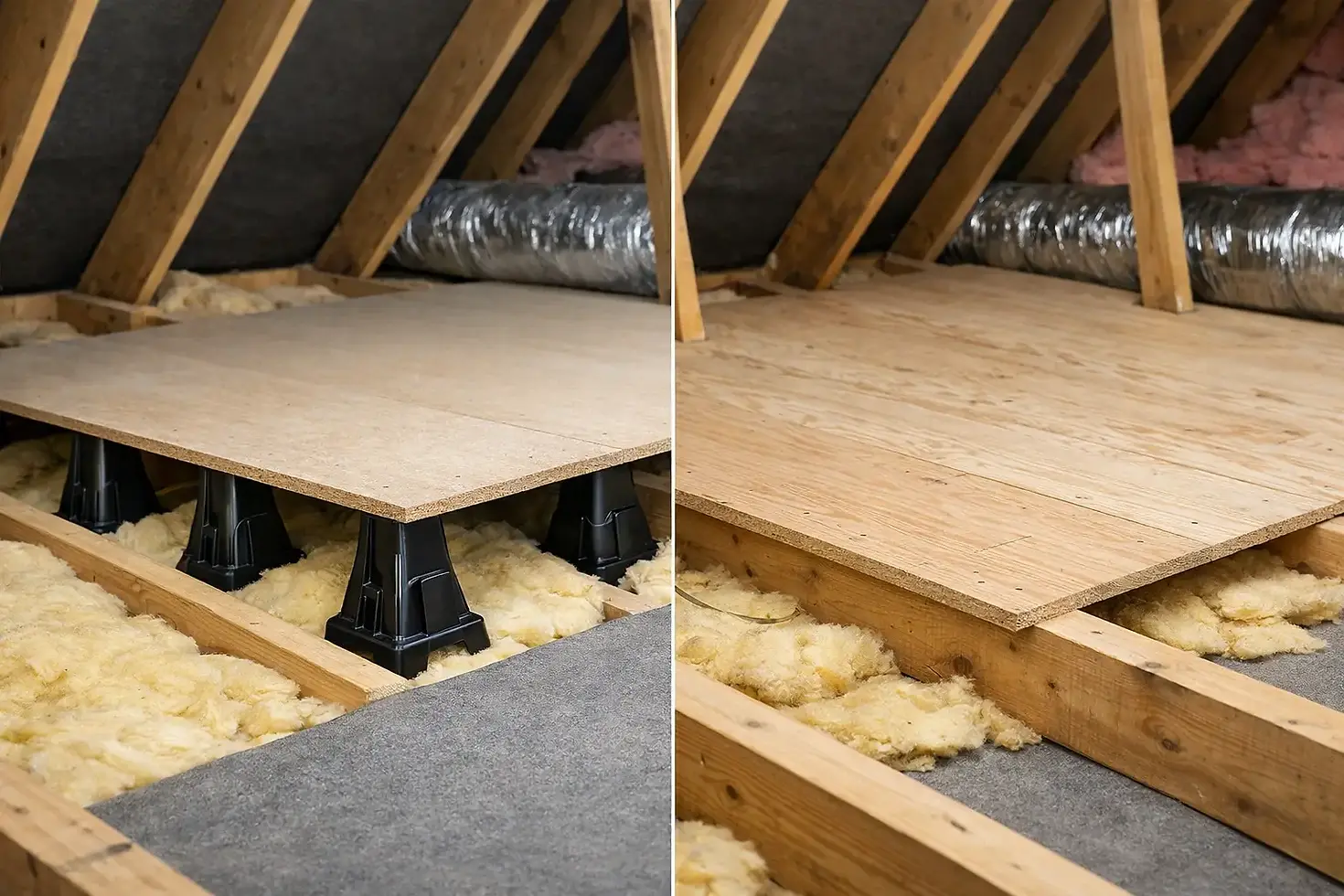
Raised Loft Floor vs Direct Boarding
- rickshomeimproveme2
- Jun 24
- 6 min read
Most loft problems start with good intentions. Someone wants a bit more storage, lays boards straight over the joists or insulation, and only later finds the loft is awkward to use, colder than before, or not suitable for the way the house was built. That is why the raised loft floor vs direct boarding question matters more than it first appears.
If you are simply trying to make your loft usable without creating bigger problems, the right choice usually comes down to insulation depth, the age of the property, and how often you plan to use the space. On paper, both options create a boarded area. In practice, they do very different jobs.
Raised loft floor vs direct boarding: what is the difference?
Direct boarding is the simpler method. Boards are fixed straight onto the existing joists, or in some cases pressed down over the insulation to create a flat surface. It is often seen as the cheaper, quicker route because there are fewer materials involved and less build-up in height.
A raised loft floor uses a support system, often raised legs, to lift the boarding above the insulation. That gap matters. It allows the insulation to keep its full depth instead of being squashed down, which helps the loft perform properly as part of the home's thermal envelope.
This is the key point many homeowners miss. Loft boarding is not just about making somewhere to put Christmas decorations and suitcases. It affects heat retention, ventilation, and in some newer homes, whether the loft is boarded in a way that suits modern building standards.
Why direct boarding can cause problems
Direct boarding is not always wrong, but it is often used in situations where it is not the best fit. In older lofts with minimal insulation and light storage needs, it may seem fine at first. The trouble starts when the loft already has a decent depth of insulation, which is common in homes that have had energy upgrades over the years.
Once insulation is compressed, it cannot trap heat as effectively. That can reduce its performance and make the property less energy efficient. Homeowners do not always notice it straight away, but over time it can work against the very reason insulation was installed in the first place.
There is also the issue of joist depth. Standard ceiling joists are not the same thing as floor joists. They were not designed to create a heavily loaded storage platform. If direct boarding encourages people to pile more and more into the loft, that can put extra strain on the structure.
In newer homes, the risk is often higher. New-build lofts are usually designed with specific insulation requirements, and boarding directly over that setup can create problems. For many homeowners, that is reason enough to avoid a quick fix.
Why a raised loft floor is often the better long-term option
A raised loft floor is designed to create usable storage while respecting the way the loft should work. By lifting the boards above the insulation, it preserves the depth needed for thermal performance and avoids flattening the material beneath.
That means you get the practical benefit you actually want - a solid, stable boarded area - without sacrificing insulation. For homes where heating bills are already a concern, that is not a small advantage.
It is also the neater option in many cases. A properly installed raised system creates a more even platform, which makes storage easier and safer. Boxes sit flatter, access feels more secure, and the loft becomes somewhere you can use with confidence rather than somewhere you climb into carefully and hope for the best.
For families, retired homeowners, and anyone planning to stay in their property for years, this usually makes more sense than the cheapest method available on the day.
Cost matters, but so does what you are paying for
When people compare raised loft floor vs direct boarding, cost is often the first thing they ask about. That is understandable. Direct boarding is usually cheaper at the outset because it uses fewer components and takes less time.
But the lower upfront cost does not always mean better value. If direct boarding compresses insulation and contributes to heat loss, the saving can start to look less impressive. If it also needs redoing later because the loft was not boarded correctly for the property, that is another expense added back in.
A raised system costs more because it is a more complete solution. You are paying for a structure that protects insulation depth, supports safer storage use, and suits modern loft requirements far better. In many homes, especially newer ones, that extra spend is the sensible spend.
The better question is not simply which option is cheapest. It is which option gives you usable loft storage without creating another problem to sort out later.
When direct boarding might still be suitable
There are cases where direct boarding can be acceptable. If a loft has very little insulation to begin with, if only a small section needs boarding, or if the space is being used very lightly, it may be a workable option. Some older properties have loft setups that allow more flexibility than newer builds.
Even then, it needs proper assessment. The condition of the joists, the existing insulation, head height, and intended storage load all matter. A quick glance from the hatch is not enough.
This is where honest advice matters. A decent installer should not push one answer for every house. They should look at the loft as it is, explain the trade-offs clearly, and recommend the method that suits the property rather than the sales pitch.
New-build homes need extra care
If you own a newer property, this comparison becomes much more straightforward. Modern homes are generally insulated to tighter standards, and loft spaces are often not suited to direct boarding over the top of that insulation.
A raised boarding system is usually the safer route because it maintains the insulation depth required and avoids interfering with the intended thermal performance of the loft. That is one reason raised-leg systems have become such a common choice for homeowners who want storage without undermining the build standard of the property.
For new-build owners, this is not about overcomplicating a simple job. It is about doing the job properly the first time.
Storage is only useful if the loft is safe to access
It is worth saying that loft boarding on its own is only part of the picture. A well-boarded loft still needs safe access if it is going to be useful in day-to-day life. That often means a proper loft ladder, adequate lighting, and a hatch that makes entry straightforward rather than awkward.
This matters because many people compare boarding options without thinking about how they actually use the space. If you are climbing up on a step ladder and balancing boxes in poor light, even the best boarding system will not feel practical.
A raised loft floor tends to be part of a better all-round setup. It suits homeowners who want the loft to function properly, not just look improved in a quote.
How to choose the right option for your home
The simplest way to decide is to start with the house, not the price list. If your loft has a healthy depth of insulation, if the property is a new build, or if you want a long-term storage solution that does not compromise energy efficiency, a raised loft floor is usually the right answer.
If the loft is older, lightly insulated, and only needs limited boarding for very light storage, direct boarding may be possible. Even then, it should be assessed properly rather than guessed.
For many homeowners across Doncaster and nearby areas, the real priority is peace of mind. They want to know the loft is boarded safely, the insulation still does its job, and the space will be genuinely useful once the work is done. That is exactly why raised systems have become the stronger option in so many homes.
A loft should make life easier, not leave you wondering whether the job was done on the cheap. If you are weighing up storage, warmth, and long-term value, the best choice is usually the one that respects all three.


Comments