
Does Loft Boarding Affect Insulation?
- rickshomeimproveme2
- May 15
- 6 min read
If you have ever climbed into your loft and thought, "I could really do with using this space properly", the next question is usually the one that matters most - does loft boarding affect insulation? The honest answer is yes, it can. But whether that effect is good or bad depends entirely on how the boarding is installed.
This is where a lot of homeowners get caught out. Loft boarding sounds simple enough, and on the surface it is. Put boards down, create storage, and make the loft easier to use. The problem starts when those boards are laid directly on top of insulation or fixed in a way that compresses it. That can reduce the insulation's performance and leave you with a loft that is practical for storage but poorer at keeping heat where it belongs.
Does loft boarding affect insulation in every home?
Not in the same way, no. Older properties, newer homes, and lofts that have already been altered can all behave differently. What stays the same is the basic rule - insulation needs enough depth and enough air within its fibres to do its job properly.
When insulation is squashed under chipboard or timber panels, it loses some of that trapped air. That matters because the air is part of what slows heat loss. Flatten the insulation, and you reduce its effectiveness. In practical terms, that can mean a colder home, higher heating bills, and a loft setup that works against the very energy savings you want.
That does not mean loft boarding is a bad idea. Far from it. It just means the boarding system has to work with the insulation, not against it.
Why direct-to-joist boarding causes problems
A lot of older loft boarding jobs were done by screwing boards straight onto the joists. Years ago, that was often seen as acceptable because insulation levels were lower. Modern standards are different. Homes now need much deeper insulation to meet expected thermal performance, and the depth of that insulation often sits above the joists.
If boards are fixed directly to the joists in that situation, one of two things usually happens. Either the insulation is compressed beneath the boards, or sections of insulation are removed so the boards can sit flat. Neither option is ideal.
Compressed insulation cannot perform at its intended level. Gaps where insulation has been pushed aside create cold spots. Both issues can contribute to heat escaping through the ceiling below. In some lofts, poor boarding can also affect ventilation, which increases the chance of condensation problems over time.
For homeowners in newer properties, there is an extra consideration. Some new-build lofts have restrictions around how they should be boarded, particularly where insulation depth and roof structure need to remain compliant with building and warranty guidance. A DIY job that ignores that can create bigger issues than expected.
The right way to board a loft without harming insulation
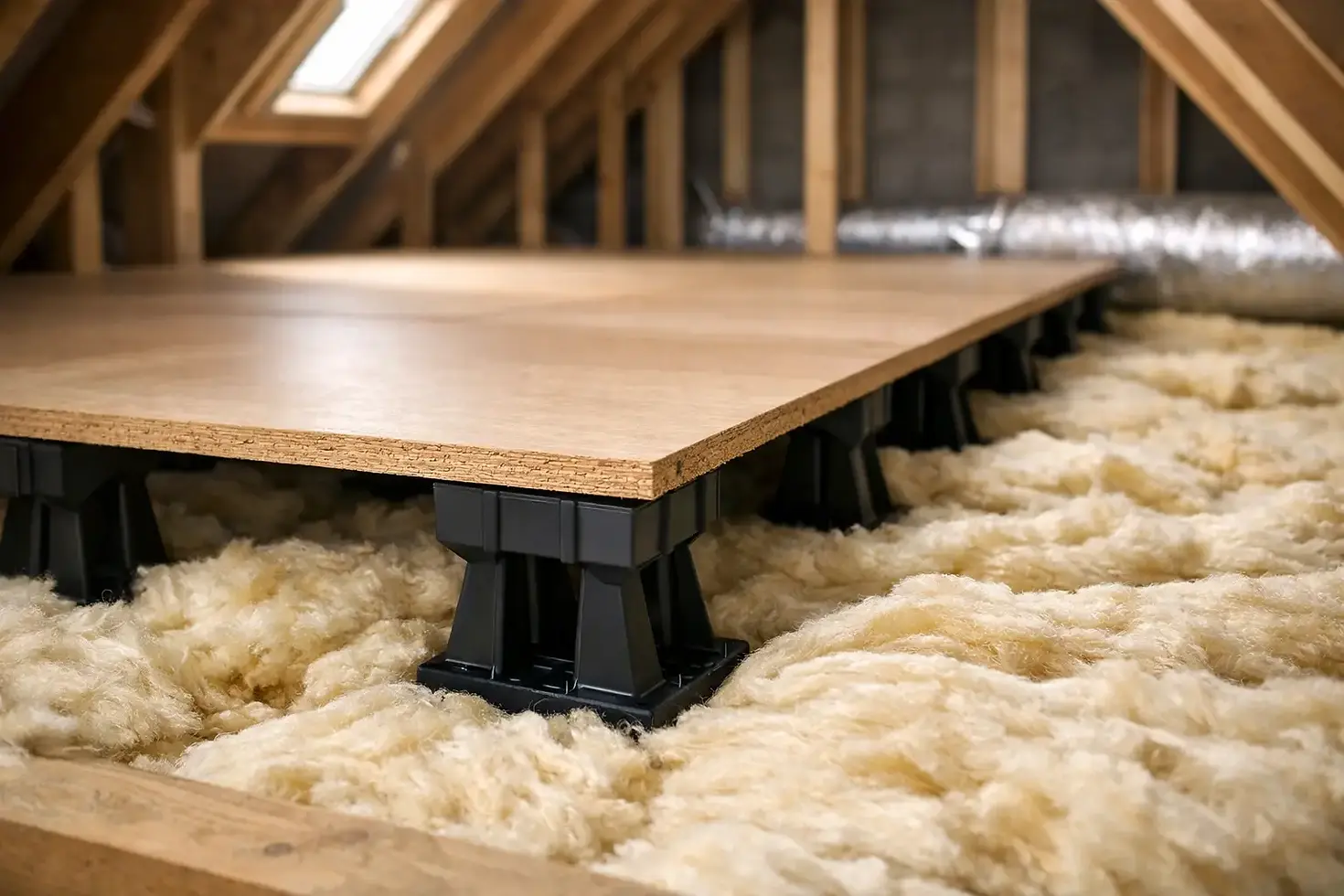
The safest and most effective approach is a raised loft boarding system. This uses loft legs or a similar support framework to lift the boards above the insulation, rather than pressing down into it.
That extra height makes all the difference. It allows the insulation to retain its full depth while still creating a solid platform for storage. In many homes, a raised 175mm system is the practical answer because it gives enough clearance to preserve the insulation layer properly and create a safe boarded area above it.
This is the key point people often miss when asking does loft boarding affect insulation. The issue is not boarding itself. The issue is whether the insulation is preserved underneath. When the system is designed correctly, you can have both usable storage and proper thermal protection.
What happens if insulation is already too low or in poor condition?
This is common, especially in lofts that have been partly boarded in the past or where the insulation has been disturbed over the years. You might find thin insulation between joists, patchy coverage, or older material that no longer performs as well as it should.
In that case, boarding should not be treated as a separate job. It makes more sense to look at the loft as a whole. If the insulation needs topping up or replacing, that should be done before the raised boards go down. Otherwise, you are just building storage over an existing problem.
A proper loft installation should consider access, lighting, insulation depth, the condition of the joists, and what you actually plan to store up there. There is no point creating a neat boarded platform if the loft remains awkward to reach or the insulation underneath is below standard.
Does loft boarding affect insulation and energy bills?
It can, and this is often where the impact becomes noticeable. If the boarding has compressed the insulation, the home may lose more heat through the ceiling. That can put more demand on your heating, especially in winter. You may not link the two straight away, but reduced insulation performance often shows up in comfort levels as much as in energy costs.
On the other hand, a correctly installed raised system can support better energy efficiency because it allows the insulation to work as intended. For many households, that means you are not choosing between storage and warmth. You are simply choosing whether the loft is fitted properly.
This matters even more if your loft is currently being underused because the insulation has made it hard to board. Some homeowners end up storing boxes on top of loose insulation, which flattens it just the same. Others avoid the loft completely because it feels unsafe to move around. A raised boarded area creates order and access without sacrificing the thermal performance underneath.
New-build lofts need extra care
New-build owners are often right to be cautious. These properties are usually built with deeper insulation levels and tighter requirements around how the loft should be used. Boarding them incorrectly can interfere with the design of the space and, in some cases, raise questions about warranty guidance.
That is why installation method matters so much. A raised system is generally the sensible route because it keeps the insulation depth intact and avoids the shortcut of compressing material to make boards fit. It also gives homeowners a more dependable result - proper storage, safe access, and less risk of creating problems that only appear later.
If you are unsure whether your loft is suitable, that is where a proper assessment helps. The answer is not always the same from one home to another. Roof structure, insulation depth, hatch size, and intended use all come into it.
Signs your current loft boarding may be affecting insulation
Sometimes the problem is already there. If your loft was boarded years ago, it is worth checking how it was done. Boards fixed directly to joists, uneven insulation around the boarded area, or sections where insulation has clearly been flattened are all warning signs.
You might also notice rooms below the loft feeling colder than expected, or find that the loft is difficult to use because there is no proper walkway and boxes are sitting on insulation rather than on a solid platform. These are not always dramatic issues, but they do point to a setup that is not making the best use of the space.
A professional installer can usually tell quite quickly whether the existing boarding is helping or hindering. In some cases, sections can be adapted. In others, removing the old boarding and starting again is the better long-term option.
Getting the balance right between storage and thermal performance
Most homeowners are not looking for anything fancy. They want a loft that is safe, practical, and worth using. They also want confidence that the work will not leave them worse off on insulation than before.
That balance is perfectly achievable when the loft is boarded with the right system. Good loft boarding should create usable storage without crushing insulation, blocking ventilation, or ignoring the needs of the property. It should also be fitted neatly, with access and usability in mind, rather than treated as a quick weekend job.
For households across Doncaster and South Yorkshire, that usually means looking beyond the cheapest option and focusing on what protects the home properly. A raised boarding system may involve more care in the installation, but it gives you a far better result in the long run.
If you are weighing up whether loft boarding is worth it, the better question is not simply does loft boarding affect insulation. It is whether the boarding is being done in a way that protects the insulation you already rely on. Get that right, and your loft can become genuinely useful without giving away the heat from the rooms below.
A well-boarded loft should make life easier, not create another hidden problem above your ceiling.


Comments