
Loft Boarding New Build NHBC Rules Explained
- rickshomeimproveme2
- May 11
- 6 min read
You only need to see one new-build loft with crushed insulation and a few wobbly chipboard sheets to understand the problem. Loft boarding new build NHBC questions usually come up after the house is handed over, when homeowners want proper storage but do not want to create damp issues, reduce energy efficiency, or risk problems with warranties.
That concern is justified. In a newer home, the loft is not the same as an older property where people often threw down boards straight onto the joists and thought no more about it. New builds are designed around tighter thermal standards, deeper insulation and controlled ventilation. If the boarding is done badly, you can easily compress insulation, reduce airflow and turn a useful storage idea into an expensive mistake.
Why loft boarding in a new build is different
Most new-build lofts are built with energy performance in mind. That usually means a thicker layer of insulation sitting above the ceiling joists. Standard joists are often not deep enough to take insulation and boarding at the same level, so if boards are fixed directly on top, the insulation gets squashed.
Once that happens, it stops performing as it should. The loft might still look boarded, but the house can lose more heat through the ceiling, and that defeats the point of modern insulation standards. In some cases, poor boarding can also interfere with ventilation at the eaves, which is there to help manage moisture in the roof space.
That is why loft boarding new build NHBC concerns are less about whether you can board the loft at all, and more about how it is done. The method matters.
What NHBC usually means for loft boarding new build work
NHBC is there to set standards for new homes and provide warranty cover, but many homeowners understandably get mixed messages about loft storage. One person says never touch it. Another says boarding is fine. The reality sits in the middle.
In most cases, basic storage use in a loft can be acceptable, but the structure, insulation and ventilation should not be compromised. The loft in a standard new-build house is generally not designed as a habitable room unless it was built for that purpose from the start. So the aim is light, practical storage with safe access - not turning the loft into another living space by degrees.
That distinction matters. Adding a raised boarding system over the joists is very different from overloading the loft with heavy furniture, gym kit or boxed-up house moves stacked to the rafters. Good installation respects the design of the home. Poor installation ignores it.
If you are still within a builder warranty period, it is sensible to check any paperwork and be clear about what is being installed. A professional installer should understand the difference between creating usable storage and altering the roof space in a way that could cause problems.
The right way to board a new-build loft
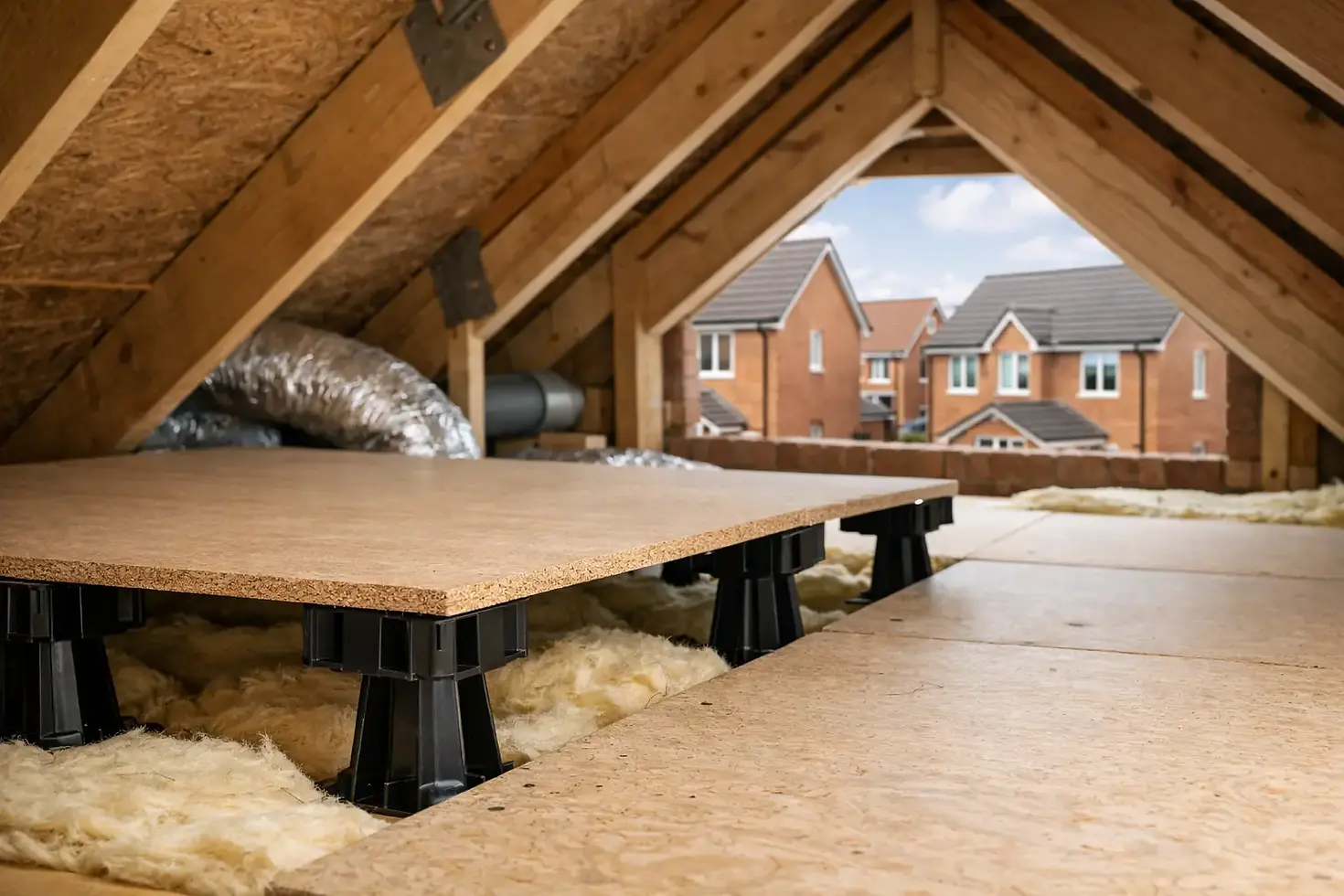
For most modern homes, the safest approach is a raised-leg system. This lifts the boards above the insulation rather than trapping it underneath. It gives you a solid deck for storage while allowing the insulation to keep its full depth and do its job properly.
A raised system also helps avoid one of the most common new-build loft issues - homeowners trying to gain storage quickly by laying boards directly onto the joists. It looks cheaper at first, but the long-term cost can be higher if it affects heat retention or creates condensation risks.
At Doncaster Loft Boarding Solutions, this is exactly why raised 175mm boarding systems are such a practical fit for newer properties. They are designed to work with insulation depth rather than against it, which is what you want in a home built to current standards.
What to avoid in a new-build loft
The biggest mistake is assuming all loft boarding is the same. It is not. A new-build loft needs a bit more care.
Direct-to-joist boarding is the usual problem. It compresses insulation and can leave you with a loft that is technically boarded but thermally worse than before. Blocking eaves ventilation is another issue, especially if insulation or stored items are pushed too far into the roof edges.
There is also the question of weight. Loft boarding for storage is not the same thing as strengthening a loft for regular heavy loads. Ceiling joists in many homes are not intended to carry substantial weight beyond normal light storage. Suitcases, Christmas decorations and household overflow are one thing. Rows of books, spare tiles and old gym equipment are another.
Electrical cables should also be treated with care. They should not simply be buried or trapped carelessly under boards without thought for access, safety or heat build-up. A proper installer will spot these details and plan around them.
Safe access matters as much as the boards
A lot of people focus on the floor and forget the route in. That is where accidents happen. If your loft hatch is small, awkward or badly positioned, and access means balancing on a step ladder while lifting boxes through a tight opening, the storage is never going to feel easy or safe.
In many new-build homes, upgrading the hatch and adding a proper loft ladder makes as much difference as the boarding itself. The loft becomes a part of the house you can actually use, rather than a space you avoid because it is inconvenient. Lighting matters too. A dark loft with one torch between your teeth is not a sensible storage area.
This is where a joined-up installation makes more sense than piecemeal fixes. Boarding, access and lighting should work together.
Is loft boarding allowed in every new build?
Not automatically, and that is where a bit of honesty helps. Some lofts are straightforward. Others have trussed roofs, limited head height, awkward service runs or restricted areas that make full boarding unrealistic. Sometimes a partial storage deck is the right answer rather than covering the whole loft.
That is not a bad compromise. In fact, it is often the sensible one. You do not need every inch of loft space boarded to make a real difference in the house below. Even a well-planned central storage area can free up cupboards, spare rooms and the garage without interfering with how the loft is meant to perform.
The best approach is to assess the property properly rather than guessing from online advice or what a neighbour has done. Two houses on the same estate can have different loft layouts and different limits.
What homeowners usually want from loft boarding new build NHBC projects
Most people are not looking for anything fancy. They want clean, secure storage, safe access and confidence that the job has been done properly. They do not want to create a future snag just to get a few boxes out of the spare bedroom.
That is why the better question is not, can I board my loft? It is, can I board it in a way that still protects the home? In a new build, that means preserving insulation depth, avoiding blocked ventilation, keeping within sensible loading, and installing a storage system that feels solid and usable.
Done properly, loft boarding can be one of the most practical upgrades you make. It gives you back space in the rooms you live in every day, without the cost and disruption of a full conversion. It also helps keep the loft tidy, because items are stored on a stable platform rather than balanced across joists and insulation.
When to get advice before going ahead
If your home is recently built, still under warranty, or has very deep insulation already in place, it is worth getting advice before any work starts. The same applies if you are unsure what the loft can safely carry, or if you have been told conflicting things by builders, neighbours or online forums.
A proper survey should look at the loft structure, insulation depth, ventilation, hatch position and the kind of storage you actually need. That tends to produce a better result than a one-size-fits-all quote. It also helps you avoid over-boarding the loft when a smaller, well-installed section would do the job better.
For most homeowners, the right answer is not complicated. A raised boarding system, sensible storage use, and safe access usually give you exactly what you need without compromising the performance of the house.
If you are thinking about boarding a new-build loft, the smart move is to treat it as a specialist job rather than a weekend shortcut. A loft should give you useful storage, not a problem hidden above the ceiling.


Comments