
Raised Loft Boarding System Explained
- rickshomeimproveme2
- May 14
- 6 min read
Most loft problems start the same way. A few boxes go up there, someone balances on the joists, insulation gets squashed, and before long the space feels awkward, risky and not much use. A raised loft boarding system solves that properly by creating a stable deck above the insulation, so you get real storage space without undermining your home's thermal performance.
For many homeowners, that balance is the whole point. You want the loft to work harder, but not at the expense of heat retention or safety. That is especially relevant in newer homes, where insulation depth matters and cutting corners can create problems later.
What is a raised loft boarding system?
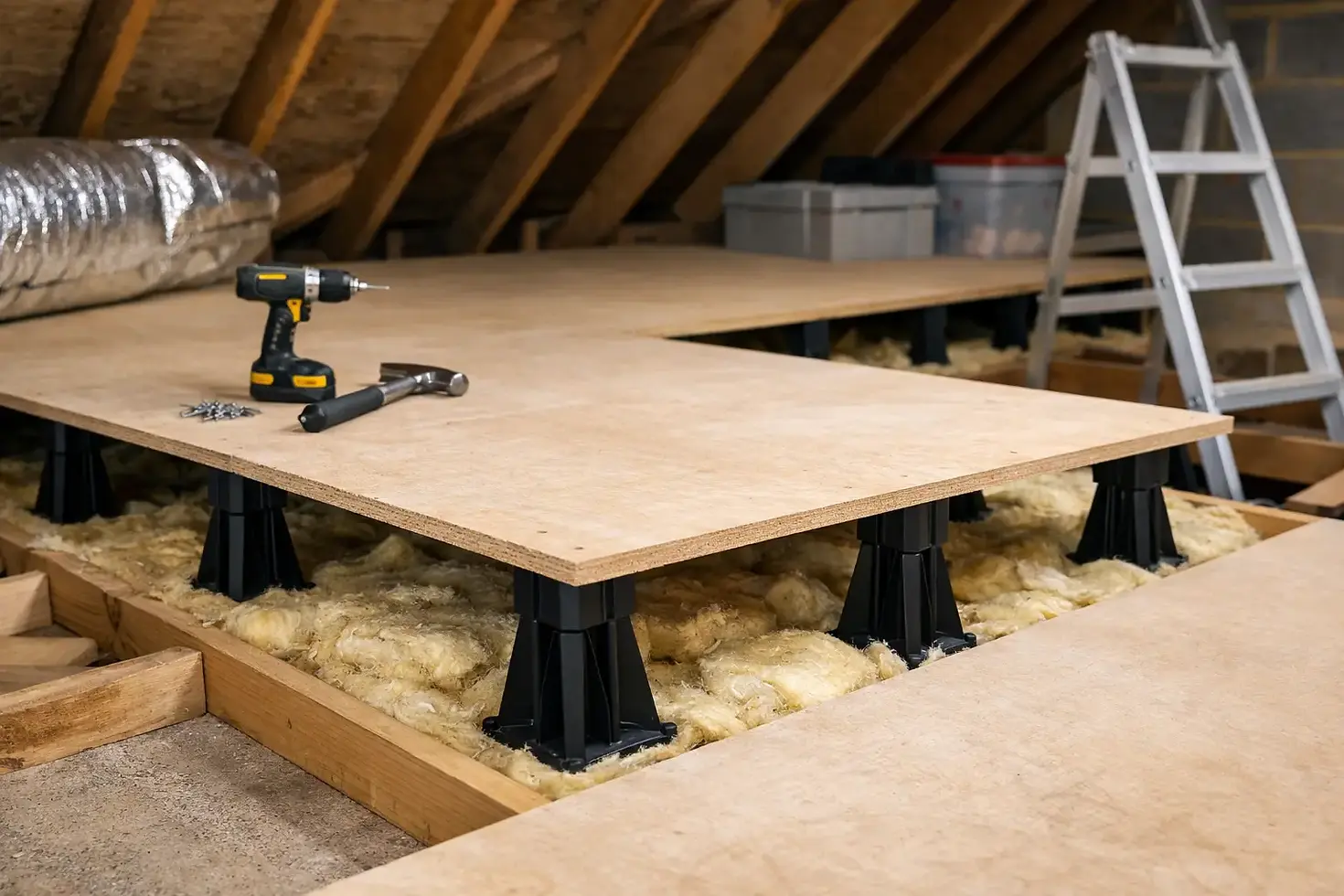
A raised loft boarding system is a method of installing loft boards on supporting legs or risers, rather than fixing them directly onto the ceiling joists. This lifts the boarded area above the insulation layer and leaves room for the recommended depth of insulation beneath.
In practical terms, it means you are not flattening insulation just to gain storage. Standard joists in many properties are not deep enough to allow full insulation depth and boarding at the same level. If boards are laid straight onto the joists, the insulation is compressed, and once that happens, it cannot do its job as well.
A raised system avoids that issue. It provides a clear boarded platform for storage while helping the loft remain energy efficient. It also creates a neater, more professional finish than the piecemeal approach many lofts end up with over time.
Why a raised loft boarding system makes sense
The biggest benefit is simple - you get usable storage space without compromising insulation. That matters in older homes and it matters even more in modern properties, where insulation standards are stricter and loft areas need to be treated carefully.
There is also the issue of safety. Ceiling joists are not designed to be walked across casually, and many DIY loft jobs leave gaps, uneven boards or unsupported sections. A properly installed raised boarding system creates a defined, solid area for storage and movement. Add a suitable loft ladder, hatch and lighting, and the space becomes genuinely accessible rather than something you dread using.
It can also help protect the condition of your home. Squashed insulation, broken plasterboard ceilings and makeshift boarding are all avoidable. Spending a bit more to do the job correctly usually saves hassle later.
Raised loft boarding and insulation depth
This is where the detail matters. A lot of lofts need around 270mm of insulation to perform well by current expectations, but many existing joists are much shallower than that. If you board directly on top of them, there is not enough space for the insulation to sit at full depth.
That is why raised systems are so popular. A 175mm raised leg system, for example, helps preserve the insulation gap needed between the joists and the boarding surface. The exact build-up depends on what is already in the loft and what condition it is in, but the principle stays the same: insulation needs room, and boarding should not take that room away.
For homeowners, the key point is this. More storage is only a good upgrade if it does not make the house colder or less efficient. A proper raised installation is designed to avoid that trade-off.
Is it suitable for every loft?
Not every loft is identical, and a good installer should be honest about that. A raised loft boarding system suits many properties very well, but the layout of the roof, the condition of the joists, head height, insulation levels and access all affect what is practical.
Older houses may have uneven loft spaces or previous alterations that need checking first. New-build homes often come with stricter expectations around insulation and safe loading, so the installation needs to be carried out with care. In both cases, a survey is the sensible starting point.
Sometimes the answer is full boarding across a large central area. Sometimes it is better to board a smaller section well, keeping clear access to tanks, pipework or electrics. The right option depends on how you actually plan to use the space.
What a professional installation should include
A proper loft boarding job is more than fitting some boards and calling it done. The loft should be assessed for safe load-bearing storage use, insulation depth, ventilation, access points and any obstacles already in place.
The raised supports need to be fixed accurately and consistently so the floor remains level and secure. The boards should fit neatly, with a finish that feels solid underfoot rather than springy or uneven. Just as important, the insulation below should remain effective, not trapped, flattened or disturbed unnecessarily.
Many homeowners also choose to combine boarding with a loft hatch upgrade, a ladder and lighting. That tends to make the biggest difference in day-to-day use. There is little value in having good storage space if getting to it is still a struggle.
At Doncaster Loft Boarding Solutions, this kind of work is approached as a practical home improvement rather than a quick add-on. That means looking at the loft as a whole and making sure the finished space is safe, tidy and worth using.
Common mistakes with DIY loft boarding
The most common mistake is boarding straight over the joists and crushing the insulation. It is easy to see why people do it - it looks cheaper and faster. The problem is that it often creates a colder home and a less effective loft overall.
Another issue is assuming all lofts are suitable for heavy storage. They are not. Loft boarding for normal household items is one thing. Storing very heavy contents or using poor-quality materials is another. If the loft is going to be used regularly, the structure and the layout need proper thought.
Then there is access. A flimsy ladder, a small hatch and no lighting can turn even a newly boarded loft into an awkward space. The best results come when the storage platform and the access are planned together.
How much storage can you actually gain?
That depends on the footprint available, the roof shape and what parts of the loft need to stay clear. Most homeowners are not trying to create a habitable room. They simply want a clean, reliable area for seasonal items, keepsakes, suitcases, decorations and the everyday belongings that tend to clutter spare rooms and cupboards.
Even partial boarding can make a big difference if it is laid out sensibly. A well-boarded central section is often more useful than a larger but poorly planned area. Once the loft is easy to reach and safe to move around in, people generally use it far more effectively.
The benefit is not just extra storage. It is freeing up the rest of the house without taking on the cost and disruption of a full loft conversion.
What to ask before going ahead
If you are considering a raised loft boarding system, ask how the insulation depth will be protected, whether the loft is suitable for the level of storage you want, and what kind of access improvements are worth doing at the same time.
It is also worth asking about the finish. A tidy installation should feel like a planned part of the home, not a patchwork of boards dropped into place. Clear pricing matters too. Homeowners generally want to know exactly what is included, how long the work will take and what result to expect when it is complete.
That straightforward approach matters in a trade service like this. Most people are not looking for technical jargon. They want to know the loft will be boarded properly, the insulation will still do its job, and the space will be easier to use from day one.
A practical upgrade that earns its keep
A raised loft boarding system is one of those home improvements that does not need much explaining once it is done well. The loft becomes easier to access, safer to use and far more useful for day-to-day living. Just as importantly, it does that without forcing a compromise on insulation.
For homeowners who need more storage but do not want to waste space or affect energy efficiency, it is a sensible upgrade with clear long-term value. The best results come from treating the loft as part of the house, not an afterthought - and getting it set up properly the first time.


Comments