

How Much to Board a Loft in a New Build?
- rickshomeimproveme2
- May 13
- 6 min read
If you have moved into a newer property and already found the airing cupboard full, the garage cluttered and the spare room doing too many jobs, the loft is usually the next place you look. The question is not just how much to board a loft new build, but how to do it properly without crushing insulation, causing condensation issues or creating problems in a house that was built to modern standards.
That is where new builds are different. In an older house, some lofts can be boarded straight onto the joists, even if that is not always the best option. In a new build, the loft is usually designed with deeper insulation to meet current thermal requirements, and that changes both the method and the price.
How much to board a loft new build?
For most new-build homes, loft boarding costs are usually based on the area being boarded, the access available and whether extra works are needed at the same time. As a rough guide, partial loft boarding in a new build often starts from a few hundred pounds for a small storage section, while a larger raised boarding installation with proper access, lighting and insulation work can move into the low thousands.
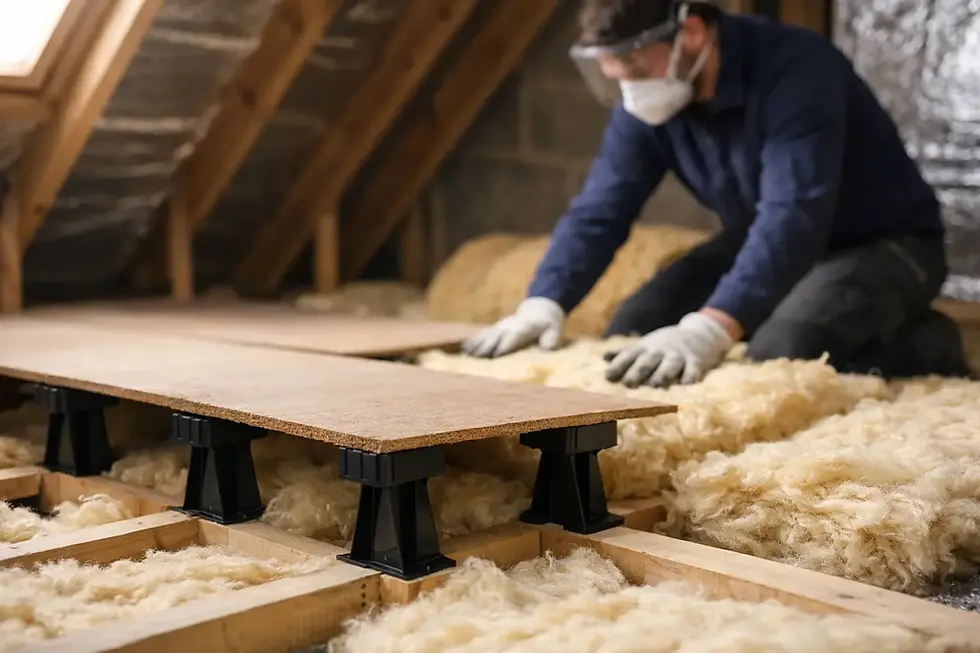
The biggest point to understand is that new-build loft boarding is rarely a case of laying boards and finishing the job. To keep insulation performing as it should, the boards normally need to be lifted above the insulation using a raised-leg system. That adds materials and labour, but it also protects the energy efficiency of the property and gives you a safer, longer-lasting result.
If you are comparing quotes, the cheapest figure is not always the best value. A lower price can sometimes mean the boards are being fixed directly onto joists, compressing insulation and reducing the benefit of the loft space in the first place.
Why new-build loft boarding costs more than older lofts
Modern homes are built with energy performance in mind. That usually means a thicker layer of loft insulation, and often a requirement to keep ventilation paths clear as well. If insulation is squashed under boards, it cannot trap heat as effectively, and that can lead to colder rooms below and higher running costs.
This is why raised boarding systems are commonly recommended for new builds. They create a platform above the insulation rather than through it. The practical benefit is simple - you get usable storage space without undoing the thermal performance your home was designed to have.
There is also a structural point. Loft joists in many newer homes are not intended to carry heavy loads in the same way as a converted floor. Boarding for light household storage is one thing. Turning the loft into a place for boxes of books, gym kit and spare furniture is another. A proper installer will explain the difference and advise what the boarded area is suitable for.
What affects the price?
The size of the area is the obvious factor, but it is not the only one. A small section boarded around the hatch for suitcases and Christmas decorations will cost much less than a near full-span storage platform.
The boarding system matters too. Standard chipboard loft panels are common, but in a new build they usually need to sit on raised supports. That extra framework forms part of the price. If the loft has awkward trusses, pipework, cables or limited head height, installation takes longer and cutting is more involved.
Access can also change the overall figure. If the existing hatch is too small, poorly positioned or awkward to use, many homeowners choose to upgrade it at the same time. Adding a proper loft ladder and lighting makes the space far more practical, but it does increase the total job cost.
Insulation condition is another variable. Some lofts already have suitable insulation depth but need the boarding raised above it. Others need topping up, tidying or replacing in areas before boarding can go ahead properly. If the loft is being used more often, safe walkways and sensible layout planning are worth considering as well.
Typical price ranges for a new-build loft
Although every property is different, most homeowners find it useful to work with broad price bands. A small raised boarded area for basic storage might sit at the lower end of the scale. A medium-sized installation in a standard three-bed new-build home, with raised boarding across the central storage area, tends to fall into the middle range.
Once you add a loft ladder, larger hatch, lighting, extra insulation or bespoke storage sections, the price naturally climbs. That does not mean it is overpriced. It usually means the loft is becoming properly usable rather than just technically boarded.
A realistic way to look at it is to treat boarding, access and lighting as part of one storage solution. Homeowners often ask for a boarding quote, then realise the real improvement comes from being able to get up there safely, see what they are doing and store things without balancing on joists.
Cheap loft boarding can cost more later
This is one of those jobs where shortcuts tend to show up after the installer has gone. If boards are fitted directly over thick insulation, you lose insulation depth. If ventilation is blocked, moisture problems can follow. If the layout is poor, you end up with a boarded loft that is still awkward to use.
For new-build owners, there is also peace of mind in knowing the work has been carried out with the property type in mind. Modern homes are not all built the same, but many share the same issue - plenty of insulation, limited practical storage, and not much room for error if someone takes a quick-fix approach.
A professional loft boarding specialist should talk clearly about loading limits, insulation clearance and access, not just square metre rates. That honesty matters more than a headline price.
Should you board the whole loft?
Not always. For many households, boarding the full loft is unnecessary and can push the cost up without adding much real benefit. A well-planned central storage area often gives enough room for seasonal items, keeps access easy and avoids wasted spend on awkward edges that are hard to reach.
That said, some families do need as much storage as possible, especially in newer homes where built-in cupboards can be limited. In those cases, the right answer depends on the loft shape, the joist layout and how the space will actually be used.
A good installer will usually recommend the amount of boarding that matches your home and budget, rather than simply trying to sell the largest job possible.
What should be included in a quote?
When you are asking how much to board a loft new build, it helps to know what you are paying for. A proper quote should make clear whether it includes raised supports, boarding panels, fitting, loft access around the hatch area and any cutting around obstructions.
It should also state whether insulation work, hatch enlargement, loft ladder installation and lighting are separate items or part of the price. If a quote seems low, check what has been left out. Sometimes the cheaper option becomes more expensive once the extras are added back in.
Clear pricing is not about making a figure look attractive. It is about helping you understand the finished result.
Is loft boarding worth it in a new build?
For most homeowners, yes - if it is done properly. New-build houses often make good use of footprint but can fall short on easy storage. A boarded loft gives you somewhere practical for the items you do not need every day, and it can free up bedrooms, cupboards and garages for better use.
The real value is not just the square metres gained. It is the fact that the storage is clean, accessible and created without compromising insulation performance. That balance is what matters in a modern property.
For households in South Yorkshire, especially those settling into a newer estate home, a professional raised boarding system is often one of the simplest ways to make the house work better without stepping into the cost of a full conversion. Doncaster Loft Boarding Solutions sees this regularly - homeowners do not necessarily want another room, they just want the home they already have to feel less cramped.
If you are weighing up cost, think beyond the initial figure and look at what the job actually gives you. The right loft boarding setup should make everyday storage easier, keep your home energy-conscious and feel like money well spent every time you put something away.


Comments