

Is Loft Boarding Worth It for Your Home?
- rickshomeimproveme2
- 2 days ago
- 6 min read
If your airing cupboard is crammed, the garage is full of boxes and the spare room has slowly turned into a dumping ground, it is fair to ask: is loft boarding worth it? For many homeowners, the answer is yes - but only if it is done properly. A badly boarded loft can squash insulation, reduce energy efficiency and create access issues. A well-installed system gives you clean, usable storage without causing problems elsewhere.
That is the real question. Not just whether loft boarding gives you more space, but whether it gives you more space safely, neatly and in a way that still works for your home long term.
Is loft boarding worth it in everyday terms?
For most households, loft boarding is worth it when you need practical storage but do not want the cost and disruption of a full loft conversion. It makes use of space you already have. Christmas decorations, suitcases, paperwork, baby items, seasonal clothing and keepsakes can all be stored overhead instead of taking over the rest of the house.
That matters more than people sometimes think. A loft that is hard to access or unsafe to use often becomes wasted space. Once it is properly boarded and paired with a suitable hatch, ladder and lighting, it becomes part of the home rather than a dark void above the ceiling.
There is also the day-to-day benefit of keeping the house tidier. Storage sounds like a small gain until it frees up a bedroom, landing cupboard or garage wall. Many homeowners are not looking for extra luxury. They simply want the house to work better.
The main benefits of loft boarding
The obvious benefit is storage, but it is not the only one. Proper loft boarding creates a stable raised platform for storing household items, which makes access safer and more convenient than balancing on joists or laying loose boards yourself.
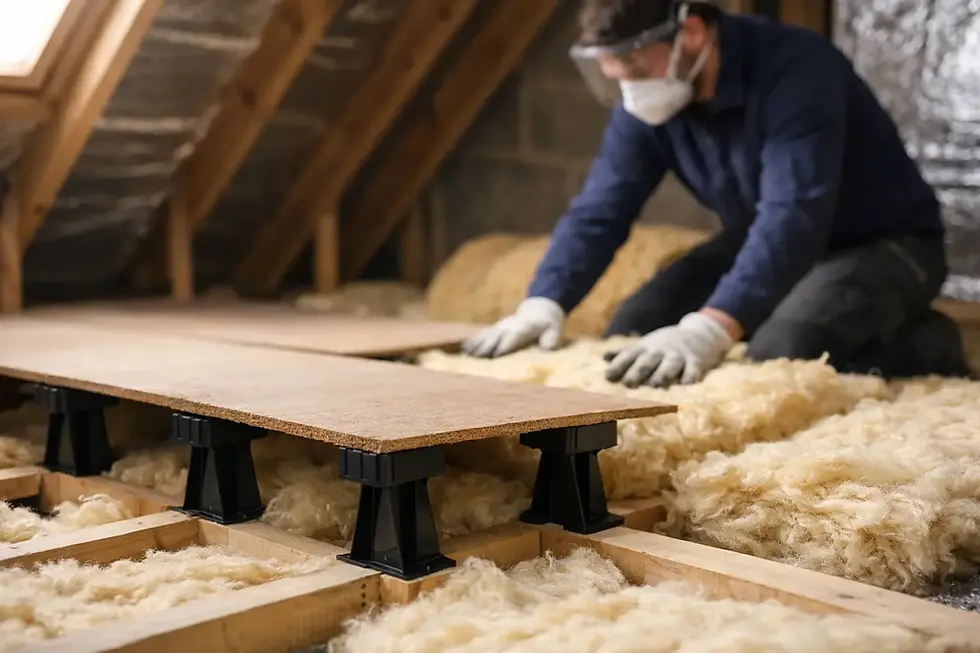
A raised system is especially important in modern homes. Insulation depth has increased over the years, and that is a good thing for heat retention. The problem comes when people lay boards directly on top of the insulation or compress it to make room. That can reduce its performance and leave you with a colder, less efficient home.
Raised-leg loft boarding solves that by lifting the boards above the insulation. In practical terms, you get usable storage while preserving the insulation depth underneath. For newer properties, that can also help keep the installation in line with expected building standards and NHBC-safe practice.
There is another benefit that tends to be overlooked: peace of mind. A professionally boarded loft gives clear walkable areas and defined storage zones. That is a very different thing from climbing into a dusty loft with a torch and hoping you do not put a foot through the ceiling.
When loft boarding makes the most sense
Loft boarding tends to be best value in homes where storage is limited but the loft structure is otherwise suitable. Families often get the biggest benefit because household belongings add up quickly over time. If you have children, hobbies, occasional-use items or paperwork you need to keep, the extra space is usually put to use straight away.
It also makes sense for homeowners who are not ready for a loft conversion and do not need habitable space. If your aim is storage rather than an extra room, boarding is far more affordable and far less disruptive.
New-build owners are another group who often benefit, provided the work is carried out properly. Many newer homes have good insulation but poor storage options. That can make the loft attractive, but it also means you need a system that respects insulation depth rather than flattening it.
Older properties can benefit too, though the right solution may depend on the condition of the loft, the joists and the existing access. This is where a proper survey matters.
When loft boarding may not be worth it
There are cases where loft boarding is not the right next step, or at least not the first one. If the loft has damp issues, poor ventilation, unsafe electrics or signs of structural concern, those problems need dealing with before any boarding goes down.
It may also be poor value if you expect the loft to function like a proper room. Loft boarding creates storage space, not living space. If your end goal is a home office or bedroom, boarding alone will not get you there.
The same applies if access is still awkward. A boarded loft with no decent hatch, ladder or lighting is only half-finished. You can technically store things up there, but in practice you may avoid using it because it is inconvenient. The best results come when the whole setup is considered together.
There is also the issue of overloading. Loft boarding is useful for household storage, but that does not mean every loft should be packed with heavy furniture, books or gym equipment. A professional installer will advise on sensible use based on the property.
Cheap loft boarding vs proper loft boarding
This is where the value question often gets decided. If loft boarding is done as a quick, cheap job, it can end up costing more later. Boards fixed straight to joists over thick insulation might look fine on day one, but they can compress the insulation, reduce airflow and make the loft harder to use safely.
DIY boarding can be tempting, especially if you only want a few panels for storage. Sometimes it works out. Often, though, people discover uneven joists, awkward pipework, cables, tight access and insulation depth problems once they start. That is before you get into safe walkways or weight distribution.
A proper raised boarding system costs more than the cheapest option, but it is designed to do the job without undermining your insulation. That is usually where the long-term value lies. You are not just buying boards. You are paying for usable storage, safer access and a loft setup that supports the way the house performs.
Does loft boarding add value to a home?
It can add value, though usually in a practical rather than dramatic sense. Few buyers will pay a huge premium simply because a loft is boarded. What it does do is make the house more functional, better organised and easier to live in.
That can make a difference when people compare one property to another. Good storage matters. Safe loft access matters. A neat, boarded loft with proper insulation and lighting feels looked after. It gives buyers confidence that the house has been maintained sensibly.
Even if you are not planning to sell, there is still value in improving the way your home works for you. A house does not need to gain thousands on paper for an upgrade to be worthwhile. Sometimes the gain is less clutter, more usable rooms and one less household frustration.
Cost versus benefit
The cost of loft boarding varies depending on loft size, insulation depth, access requirements and whether you also need a ladder, hatch or lighting. That is why fixed assumptions can be misleading. A small storage area in one loft is not the same job as creating a fully boarded central section with safe access in another.
What matters is whether the result solves a real problem. If loft boarding clears space in the bedrooms, protects your insulation and makes the loft easy to use, most homeowners feel the investment is justified. If the work is rushed or the system is wrong for the property, the value drops quickly.
The best way to look at it is this: loft boarding tends to be worth it when it replaces wasted space with practical storage and does so without compromising energy efficiency. That is the point where cost turns into long-term usefulness.
So, is loft boarding worth it?
Yes, in many homes it is. But it is worth it because of how it is done, not just because boards are fitted in the loft. The right setup should protect insulation, create reliable storage and make access safer and easier. That is what turns the loft from dead space into something genuinely useful.
For homeowners around Doncaster and the wider South Yorkshire area, that often means choosing a raised boarding system rather than the cheapest fix. Doncaster Loft Boarding Solutions focuses on exactly that practical balance - better storage without sacrificing thermal performance.
If your loft is currently awkward, underused or full of untapped potential, the best next step is not guessing. It is finding out what the space can sensibly do, and making sure any work adds convenience rather than future headaches.


Comments