
Boarding Loft Above Insulation Properly
If your loft is full of insulation but useless for storage, you are not alone. Boarding loft above insulation is the right way to make that space practical without flattening the very material that helps keep heat in your home. It solves a common problem for homeowners across Doncaster - you need somewhere to store things, but you do not want to lose energy efficiency or create issues in the loft.
A lot of older loft boards were laid straight across the joists, and for years that was seen as normal. The problem is that insulation standards have changed. In many homes, especially newer ones, the insulation now sits higher than the joists. If you lay boards directly on top, you compress the insulation, reduce its performance and can end up with a loft that works against your heating bills rather than helping them.
Why boarding loft above insulation matters
Loft insulation works by trapping air and slowing heat loss. Once it gets squashed, it cannot do that job as effectively. That is why boarding loft above insulation is not just a storage upgrade. It is also about protecting the thermal performance of your property.
For many households, the loft becomes the overflow area for suitcases, Christmas decorations, keepsakes, baby equipment and all the bits that do not fit anywhere else. But a loft that is awkward to access, poorly lit and unsafe to walk in soon becomes dead space. A raised boarding system changes that by creating a solid platform above the insulation rather than through it.
This is especially relevant in new-build homes. Many of these properties have deeper insulation levels and stricter guidance around what should and should not be done in the loft. Homeowners often move in assuming they can board it the old-fashioned way, only to find that doing so may not be suitable for the construction of the property or the insulation depth already installed.
The problem with laying boards straight on joists
At first glance, laying chipboard loft panels directly onto joists can seem like the cheaper option. Materials are easy to find, and it may look like a quick weekend job. In practice, it often creates more problems than it solves.
The first issue is insulation compression. If the insulation is 270mm deep and your joists are far shallower, there is simply no room for standard boards without squashing the material underneath. That means reduced efficiency and, in some cases, cold spots developing across ceilings below.
The second issue is safety. Loft joists were not designed to become a full floor in the same way as a room below. The loft may be suitable for light domestic storage, but that depends on the structure, the span and how the boarded area is installed. Good installation is not just about fixing panels down. It is about understanding where storage can safely go and how to create access without encouraging unsafe use.
The third issue is access and convenience. A loft with boards but no proper hatch, ladder or lighting is still awkward to use. People end up balancing on insulation rolls, reaching blindly into dark corners and treating the space as a last resort rather than a useful part of the home.
How a raised system works
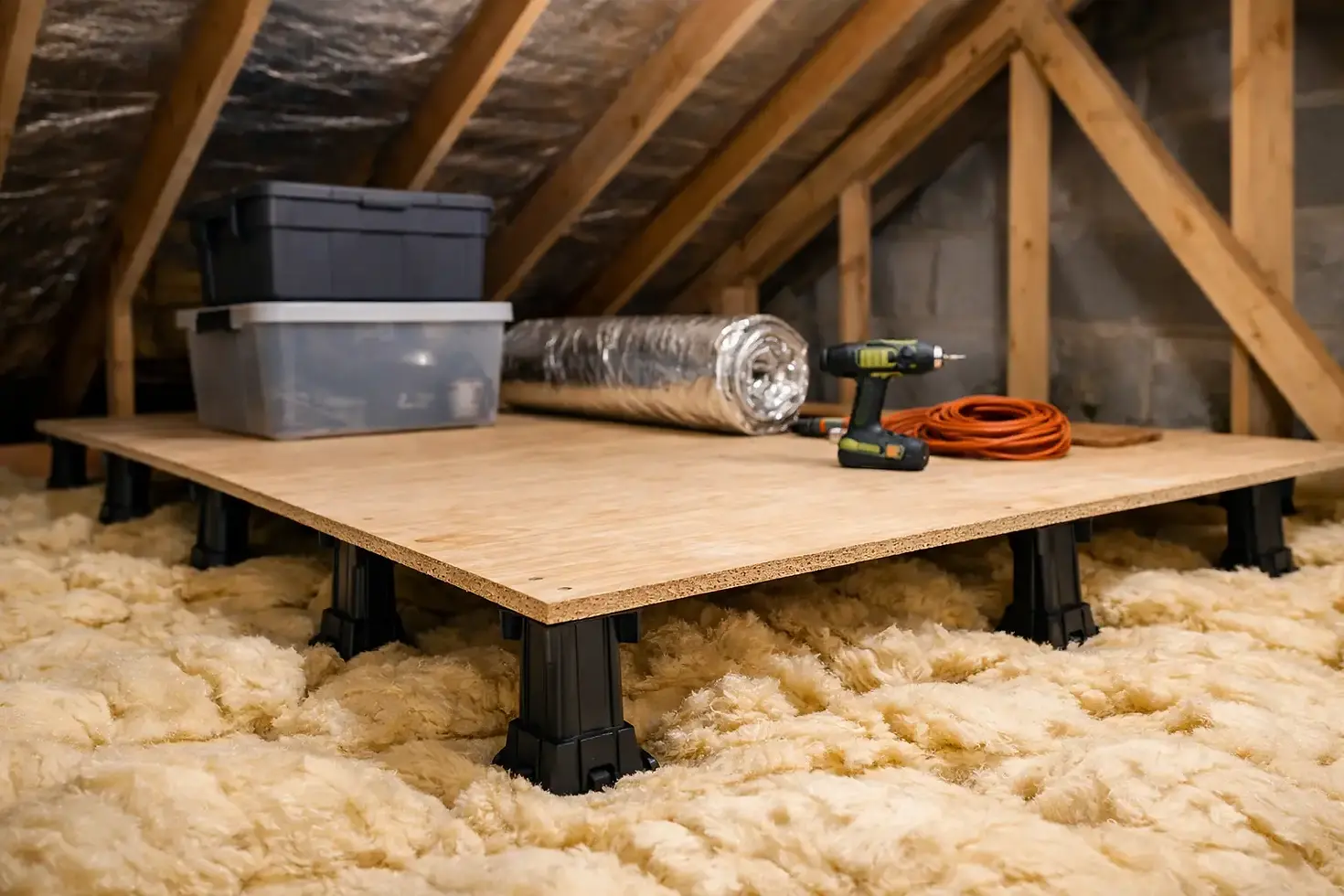
The modern answer is simple. A raised-leg boarding system lifts the boards above the insulation, leaving the insulation depth intact while creating a stable decked area for storage.
In practical terms, legs are fixed to the joists, and the loft boards are then attached to those supports. This creates a gap between the top of the insulation and the underside of the boards. That gap matters because it allows the insulation to remain full depth and continue doing its job.
For many homes, a 175mm raised system is a sensible fit because it helps accommodate modern insulation depths while producing a usable storage platform. It is a tidy, purpose-made solution rather than a makeshift one. For homeowners, that means a loft that feels properly finished and straightforward to use.
Boarding loft above insulation in new-build homes
New-build lofts need particular care. They often come with warning labels or restrictions around storage, and that can cause confusion. It does not always mean the loft can never be boarded. It usually means it must be done correctly, with the right system and with proper attention to standards and loading.
That is where specialist installation makes a real difference. A one-size-fits-all approach rarely suits newer properties. Insulation depth, truss layout, access points and ventilation all need to be considered before any boarding goes down.
It also depends on what you want from the space. Most homeowners are not trying to create a habitable room. They simply want clean, safe storage for lighter household items. A professionally installed raised platform can achieve that without compromising the insulation or turning the loft into something it was never meant to be.
More than boards - making the loft usable
A loft only becomes properly useful when the whole setup works together. Boarding is one part of it, but access and visibility matter just as much.
A larger or better-positioned loft hatch can make a surprising difference, especially in homes where the original opening is cramped. A secure loft ladder means you can get up and down safely without wrestling with a stepladder. Good loft lighting turns the space from a dark void into something practical. These are not flashy additions, but they are the details that make the difference between a boarded loft that gets used every week and one that still gets avoided.
For households with growing families, that convenience matters. Seasonal clothes, toys, paperwork and spare bedding all need somewhere to go. The loft is often the obvious answer, but only if it is easy and safe to reach.
Is raised loft boarding worth it?
For most homeowners who need extra storage, yes. It is usually far more affordable than a loft conversion and far less disruptive than trying to create space elsewhere in the house. It gives you back an area you already own.
That said, it is worth being realistic. Raised loft boarding is ideal for storage, not for turning the loft into a spare bedroom, office or playroom. If your aim is simply to organise the house better and free up wardrobes, cupboards and garages, it is a very sensible upgrade. If you want a habitable room, that is a different project entirely.
There is also a cost difference between a quick DIY board-over and a proper raised installation. The proper system will cost more upfront, but it protects the insulation and gives a better long-term result. In many cases, paying once for the right job is cheaper than correcting a poor one later.
What to look for when choosing a loft boarding installer
You want clear advice, not guesswork. A good installer should explain how the system works, what area can be boarded, and whether any other improvements such as insulation top-up, lighting, a hatch upgrade or ladder installation would make the loft more practical.
Transparent pricing matters as well. Homeowners do not want vague estimates or surprise extras. They want to know what is included, what the finished result will look like and how long the work is likely to take.
Just as important is a tidy, specialist approach. Loft work can be messy if handled badly. Dust, awkward access and poor cutting can leave a homeowner with more hassle than expected. A professional installer should make the process straightforward, protect the property during the work and leave the space clean and ready to use.
That is why many people prefer to use a local specialist rather than treat loft boarding as a sideline job. Done properly, it is a practical home improvement with clear everyday value.
The long-term benefit of boarding loft above insulation
The best thing about boarding loft above insulation is that it solves two problems at once. You gain storage, and you keep the benefit of proper insulation depth. That balance is what makes the system so useful in modern homes.
Instead of choosing between warmth and storage, you can have both. You can clear out spare rooms, make better use of the house and keep the loft in line with the way it should perform. For many homeowners, that is all they want - a safe, solid storage area that does not create problems later.
At Doncaster Loft Boarding Solutions, that is exactly the point of the job. A loft should be accessible, practical and finished properly, not half-boarded, awkward to reach and working against your home's energy efficiency.
If your loft is currently a cold, cluttered space with insulation you are worried about damaging, the right answer is not to ignore it. It is to make it useful in a way that respects how your home is built.



Comments